Manufacturing also drives the growth of a beauty brand
For years, beauty and personal care brands treated cosmetic manufacturing as one of the final stages in product launch. Manufacturing was assumed to be a standardized step—any certified facility could produce the same result as long as it followed the technical specification. Under this view, competitive advantage relied exclusively on brand strength, not on how or by whom the product was manufactured.}
Over time, end consumers have become significantly more demanding in their purchasing decisions. Today, they expect traceability of ingredient origins, transparency in manufacturing processes, and a strong commitment to sustainability. This shift has turned the selection of a development and production partner into a strategic decision for any brand aiming to grow in today’s competitive beauty market.
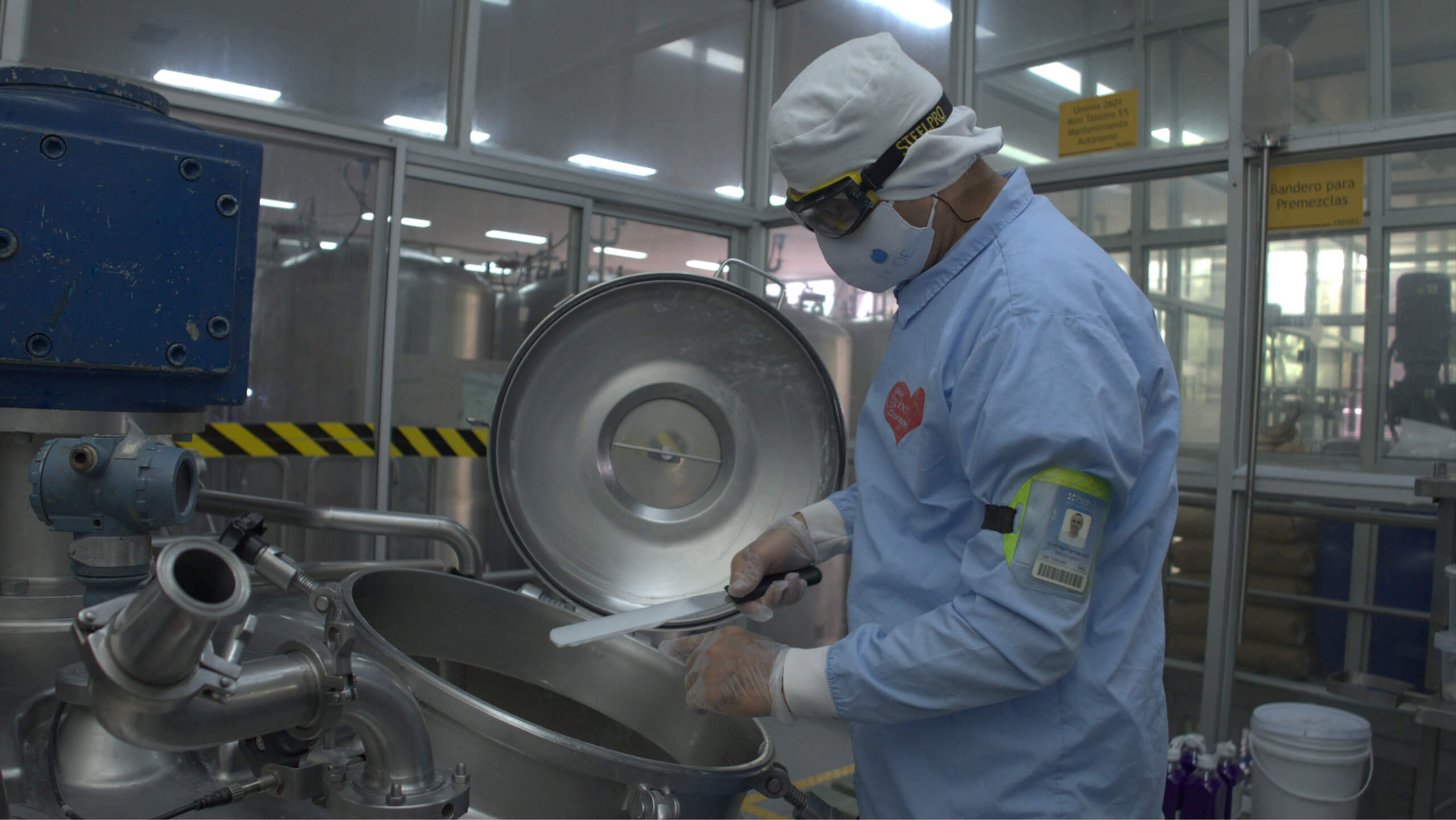
How the role of manufacturing has evolved in the beauty industry
For a long time, outsourcing beauty product manufacturing meant producing exactly what the brand requested under a model known as CMO (Contract Manufacturing Organization). However, this role has become insufficient in the face of two major market shifts:
- Brand requirements have changed. Companies no longer evaluate only whether a facility can deliver on time. They now assess installed capacity, operational flexibility, and scalability.
- The pressure to scale has intensified. Independent brands that successfully entered the market in recent years are now scaling their operations, while new brands continue to emerge. This increases pressure on both established brands and manufacturers.
to CMO. A CDMO manages the entire project lifecycle, from formulation to product launch.
What to expect from a manufacturing partner in the beauty sector
A manufacturing partner for beauty and personal care products should have the following capabilities to provide strong support to its clients:
- A diversified raw material supplier portfolio. A broad and established supplier network reduces the risk that a shortage of a single ingredient will halt production.
- Flexible batch and formulation capacity. Processing equipment capable of handling both small pilot batches and multi-ton production volumes enables support for both product launches and large-scale demand.
- Filling line capacity. Multiple active filling lines allow different formats or product references to be produced simultaneously, avoiding sequential scheduling that increases total production time.
- Contingency management capabilities. A manufacturer with sufficient installed capacity and structured response protocols reduces the risk of disruptions caused by internal or external issues.
- Valid and up-to-date certifications. Good Manufacturing Practices (GMP) certification required by INVIMA is essential to ensure compliance with legally established sanitary standards.
- Participation in product development. A manufacturer with in-house formulation capabilities contributes technical expertise from the earliest stages of product development.
Learn more about the categories we serve at Prebel
Development and manufacturing must work together to scale in the market
Working from the beginning with a proven CDMO enables a brand to be prepared for growth when new opportunities arise. Scaling is only possible if the manufacturer can respond effectively in the following areas:
- Replicating formulas at larger volumes. A formula that is stable in a 500-gram batch may behave differently in multi-ton tanks. Viscosity, stability, and mixing times change at scale. The manufacturer must validate these adjustments without interrupting product supply.
- Adapting infrastructure to new volumes. Packaging types, dosing systems, or the need for additional production lines change as demand increases. The manufacturer must implement these adjustments without forcing delays or requiring a change of production partner.
- Maintaining lead times. Increasing production volume requires more processing time. The manufacturer must manage this without affecting delivery schedules to distributors and retailers.
- Ensuring raw material supply continuity. An ingredient sufficient for small batches may become limited at scale. The manufacturer must secure alternative suppliers or validated substitutes to ensure production is never constrained.
Explore the solutions we offer at Prebel for your brand
Prebel is a strategic partner for beauty brands
A brand’s needs evolve over time. What begins as a single product launch can become a consolidated market presence requiring a more robust level of support. For this reason, the most successful beauty brands no longer see their manufacturer as a simple supplier executing specifications. Instead, they view them as a strategic partner within their business ecosystem.
With more than 85 years of experience, Prebel supports beauty and personal care brands with tailored, timely solutions. By understanding how brand needs evolve and actively contributing to solving them, Prebel delivers end-to-end solutions, world-class quality, and manufacturing capabilities that scale alongside the brand.
Why is manufacturing so important in a beauty brand strategy?
Because production decisions—including formulation, process design, installed capacity, and regulatory compliance—determine a brand’s ability to innovate, scale, and maintain quality beyond a single product launch.
What is the difference between contract manufacturing and a CDMO?
Contract manufacturing focuses solely on producing according to brand-defined specifications. A CDMO (Contract Development and Manufacturing Organization) also participates in product development, integrating research, formulation, and scalability planning before manufacturing begins.
Why is it important to involve manufacturing early in product development?
Because it allows validation of technical feasibility, accurate investment planning, realistic production timelines, and early identification of regulatory and supply constraints before market launch.
What should a brand look for in a cosmetic manufacturing partner?
Sufficient installed capacity, compliance with Good Manufacturing Practices, technical expertise in the relevant product category, and the ability to participate from the development stage—not only final production.
If you want to learn more about how Prebel can support your brand, contact us and we will get back to you shortly